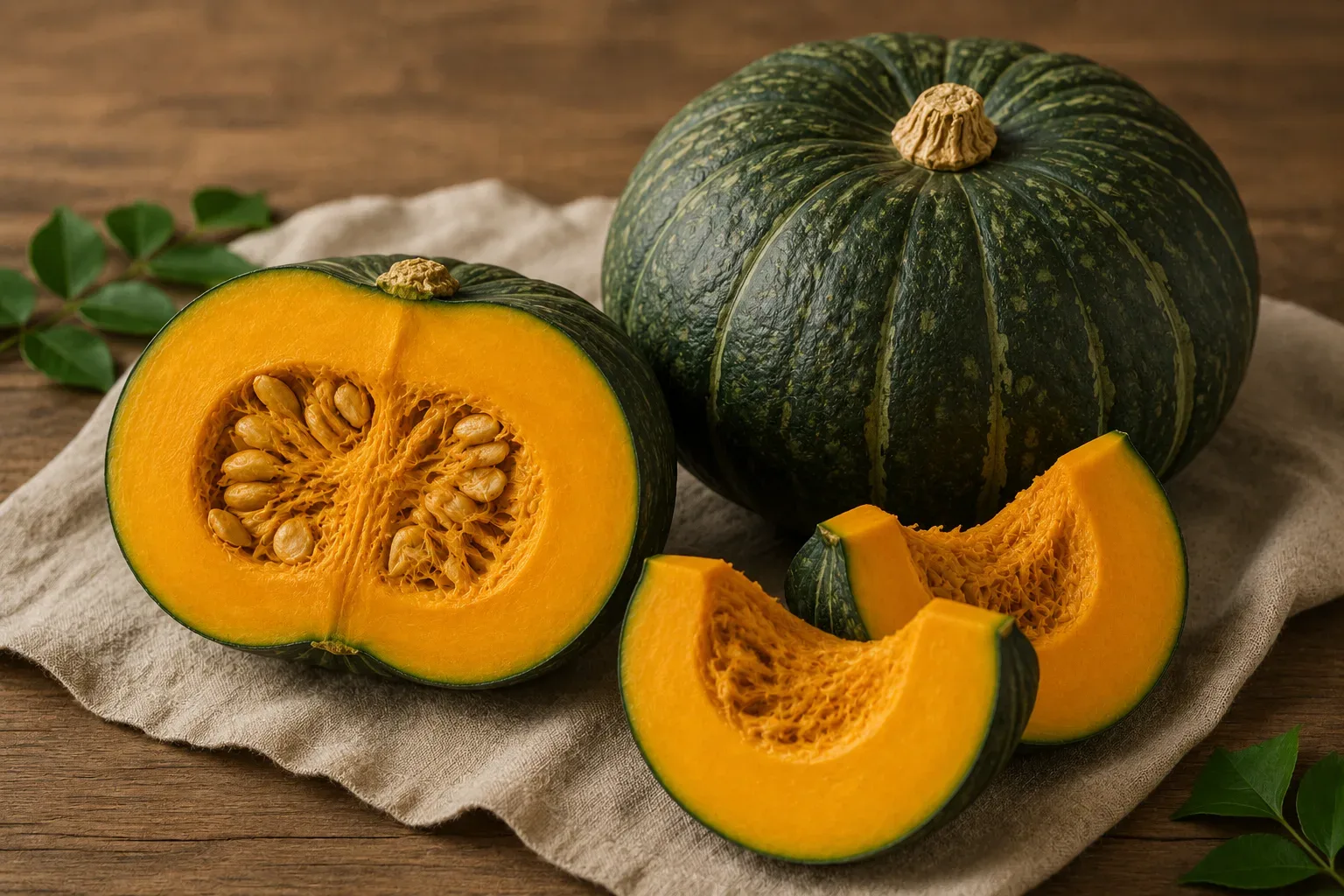
On a vibrant autumn dinner plate, kabocha squash shines with its deep orange hue, inviting you to savor its sweet, nutty flavor. This Japanese pumpkin is not only a delight to the taste buds but also a powerhouse of nutrition, rich in beta-carotene, which supports eye health and boosts immunity. As you explore the many ways to use kabocha squash, you'll discover its versatility and abundance of health benefits.
Kabocha squash is packed with beta-carotene, a precursor to vitamin A that plays a critical role in maintaining healthy vision and skin. This antioxidant also helps combat oxidative stress in the body, supporting overall cellular health.
Insight Tip (How to Eat): Pair kabocha squash with a source of healthy fat, like olive oil, avocado, or nuts, to enhance the absorption of fat-soluble beta-carotene.
Broader Health Benefits
In addition to beta-carotene, kabocha squash is a great source of dietary fiber, vitamins C and B6, and potassium. The fiber content aids in digestion and helps maintain healthy blood sugar levels, while potassium supports heart health by regulating blood pressure. Regular consumption of kabocha squash can contribute to a balanced diet and may improve gut health, making it a fantastic addition to your meals.
Insight Tip (How to Eat): Don't peel kabocha squash before cooking; the dark green skin is completely edible, delicious, and packed with extra fiber and concentrated phytochemicals.
Elite Terroirs / Specialty Regions
Kabocha squash is primarily grown in Japan, where it is celebrated for its rich flavor and creamy texture. The unique climate and soil conditions contribute to its sweetness and high-quality flesh. Notably, the Kabocha variety from Hokkaido is renowned for its exceptional taste and is often used in traditional Japanese dishes. Other regions that produce high-quality kabocha include:
California, USA: Known for its warm climate and fertile soils, California produces sweet and tender kabocha squash that is increasingly popular in various culinary applications across North America.
South Korea: Known locally as 'danhobak' (sweet pumpkin), Korean kabocha squash is widely loved for its dense texture. It is a star ingredient in comforting autumn dishes like danhobak-juk (sweet pumpkin porridge) and nutritious side dishes.
In conclusion, the healthiest foods are not always the flashiest or most expensive. Kabocha squash, with its vibrant color and rich nutrients, proves that accessible everyday foods can restore minerals, antioxidants, and fiber to our diets. Incorporating kabocha squash into your meals not only enhances flavor but also contributes to your overall health. So, next time you're at the market, consider adding this delicious squash to your cart and enjoy its many benefits regularly on your table.