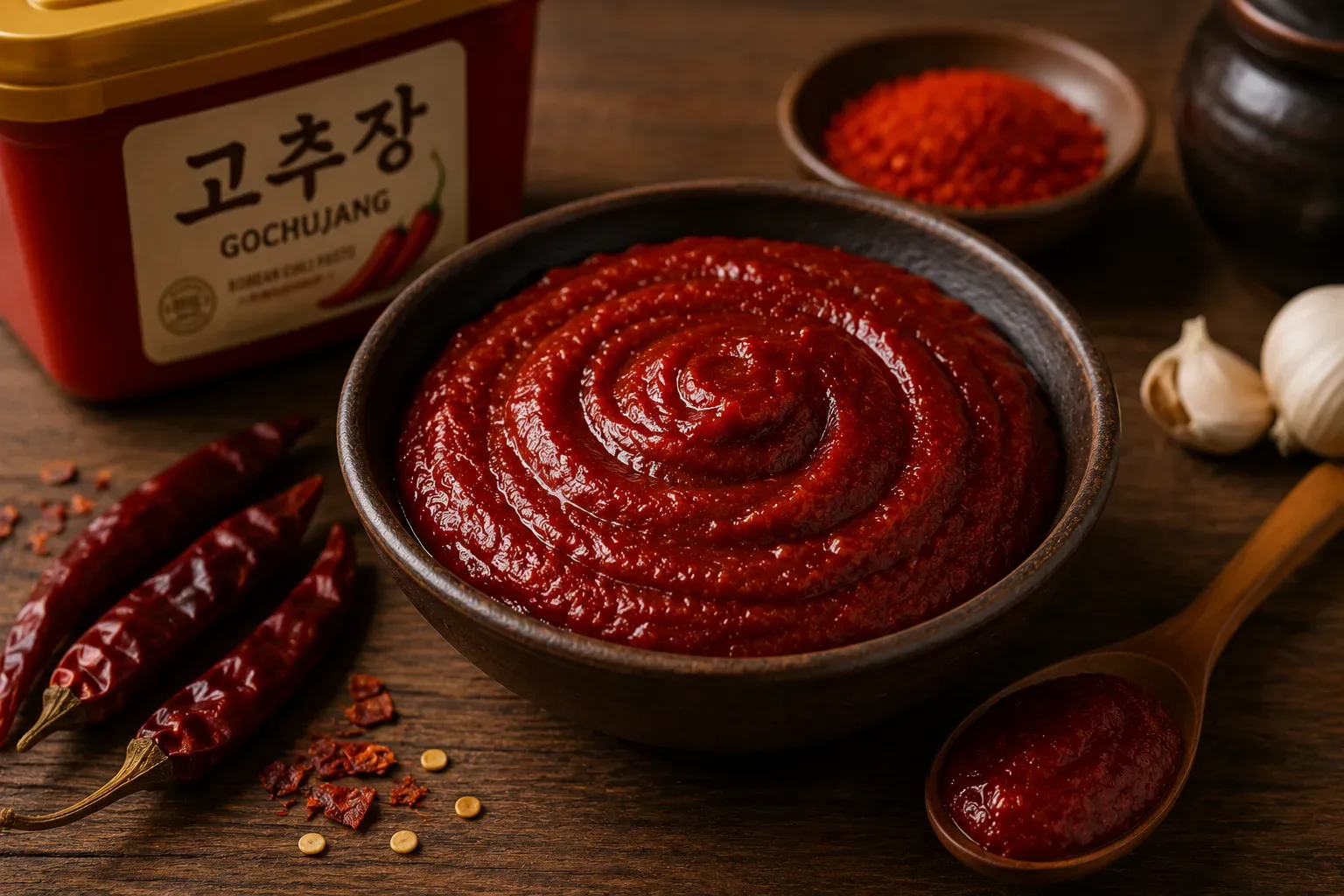
Imagine a vibrant, beautifully arranged bowl of bibimbap—its colorful mountain and land ingredients harmoniously placed, with a deep crimson dollop of gochujang sitting like a jewel right at the center. This iconic Korean chili paste does far more than lend an alluring, glossy red hue to a dish; it delivers a complex, layered flavor profile where initial fiery heat seamlessly melts into a rich, savory umami and an elegant hint of natural sweetness. Bursting with deep savory depth, gochujang is a highly versatile ferment that effortlessly elevates everything from slow-cooked marinades to comforting stews, cementing its status as a timeless staple in modern global kitchens.
Nutritionally, gochujang stands shoulder-to-shoulder with other elite fermented superfoods. Its true magic is unlocked during its long, patient aging process, which fosters the development of beneficial bio-active compounds. Powered by capsaicin—the fiery driver behind chili peppers—and rich prebiotic and probiotic foundations, this pantry powerhouse is an exceptional tool for boosting metabolic vitality and nurturing gut wellness.
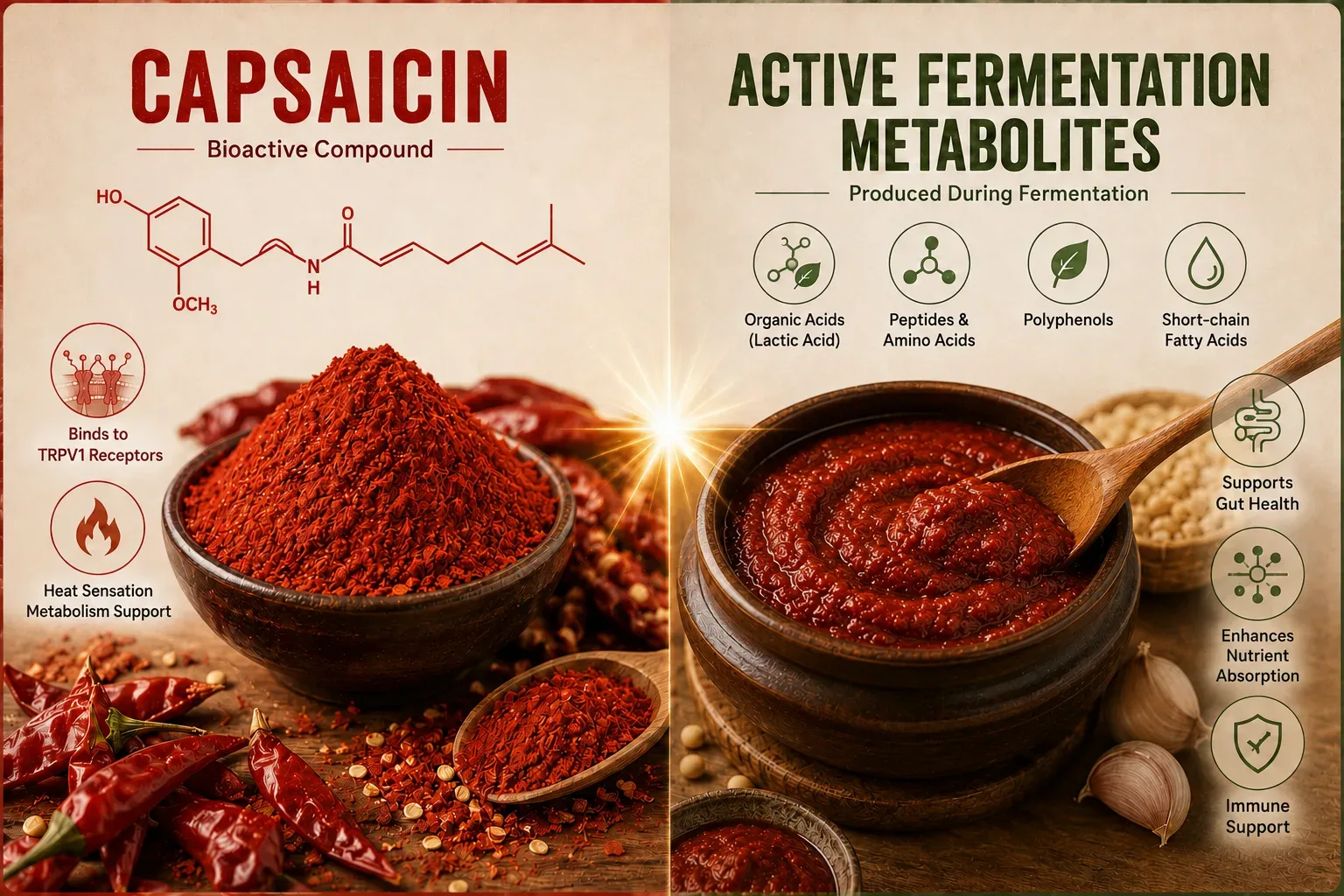
1. Signature Nutrient: Capsaicin & Active Fermentation Metabolites
The defining bioactive marvel within gochujang is capsaicin, the natural compound that gives chili peppers their signature, soul-warming kick. Beyond merely adding heat, capsaicin has been extensively studied for its ability to stimulate circulation, mitigate systemic inflammation, and temporarily elevate the body’s metabolic rate. Furthermore, the sharp heat triggers a rapid release of endorphins in the brain, providing a natural, safe mood boost often affectionately referred to in Korea as a therapeutic release of daily stress.
💡 Insight Tip (Maximizing Bioavailability)
To beautifully round out the heat and maximize nutrient uptake, always cook or serve gochujang with a touch of toasted sesame oil. Because capsaicin is a fat-soluble compound, pairing it with high-quality, healthy fats allows your body to absorb its anti-inflammatory properties far more efficiently while adding an unforgettable nutty aroma to your plate.
2. Broader Health Benefits: Gut Vitality and Immune Resilience
Gochujang's nutritional benefits extend far more than a quick metabolic boost. Through its traditional aging process, the fermented soybeans (meju) break down into highly bioavailable peptides and essential amino acids. This makes it rich in vital trace minerals like iron, as well as immune-supporting vitamins. Most importantly, the living fermentation culture acts as an excellent source of beneficial microbes, supporting active digestion, strengthening the gut barrier, and cultivating a resilient microbiome.
💡 Insight Tip (Balancing Flavor and Intestinal Care)
Gochujang contains live cultures that thrive during fermentation. To preserve these delicate benefits, avoid boiling gochujang at aggressive heats for extended periods. When making soups or stews, stir the paste in during the final stages of cooking. Additionally, if the heat is too intense for your palate, never dilute it with non-traditional dairy like yogurt, which clashes with the fermented profile; instead, balance it beautifully with natural sweeteners like honey or a splash of smooth Korean grain syrups (jochung).
3. The Historical Roots: A Culinary Journey of Thousands of Years
The history of gochujang is a fascinating tale of adaptation and royal accidental discoveries:
The Pre-Chili Era: Long before chili peppers became synonymous with Korean food, ancient Koreans were already absolute masters of fermentation. Historical medical texts dating back to the 9th and 15th centuries record early versions of chojang (pepper paste), which achieved its fiery, medicinal heat using indigenous spices like black peppercorns, Sichuan peppercorns, and wild ginger.
The King’s Unforgettable Meal: The legendary status of Sunchang gochujang traces back to the late 14th century, at the dawn of the Joseon Dynasty. Before becoming the first king of Joseon, General Yi Seong-gye stopped at Manilsa Temple in Sunchang. There, a humble monk served him a simple bowl of barley bibimbap mixed with a local fermented pepper paste. The flavor was so profoundly delicious that once he ascended the throne as King Taejo, he ordered Sunchang gochujang to be regularly served to the royal court, securing its eternal fame.
The Chili Revolution: In the 16th century, Capsicum annuum (chili peppers) arrived on the Korean peninsula via global maritime trade routes. Recognizing that these new peppers held an exquisite balance of clean heat and natural sweetness, Korean cooks immediately integrated them into their traditional soybean fermentation methods. By the 1700s, this fusion perfected the thick, umami-packed red gochujang we love today.
4. Premier Terroirs and Cultural Legacies
The production of authentic gochujang is an esteemed craft in Korea, with specific regions globally celebrated for preserving centuries-old fermentation secrets:
Sunchang County: Universally recognized as the ultimate capital of traditional Korean pastes. Blessed with a unique microclimate featuring optimal humidity, low foggy winds, and pristine mountain waters, Sunchang provides the perfect environment for slow, natural earthenware aging. Its historical prestige as the choice of kings remains unmatched to this day.
Jeonju (The Culinary Capital): While Jeonju is globally famous as a UNESCO Creative City of Gastronomy, it is celebrated not for raw paste production, but for its legendary mastery of Bibimbap. Jeonju chefs are famous for sourcing premium aged gochujang and blending it with rich beef broths to create a milder, deeply savory sauce that perfectly unifies an entire bowl of grains and mountain greens.
The Global Recognition: Highlighting its profound cultural and artisanal value, Korea’s time-honored Jang-making culture (the traditional art of fermenting soy and chili pastes) has been officially inscribed on the UNESCO Intangible Cultural Heritage of Humanity list. This recognizes the generational knowledge and communal spirit required to craft true gochujang.
Gochujang stands as a triumphant example of how the most health-supportive ingredients are often deeply rooted, accessible everyday staples rather than fleeting luxury trends. With its rich, complex flavor matrix and immense antioxidant and digestive benefits, this savory paste is an effortless asset for upgrading any weekly meal plan.
It is far more than a simple condiment; it is a living, functional ingredient designed to bring genuine character, depth, and structural nourishment to your table. Let this vibrant red jar inspire your next culinary venture, and embrace the delicious, deeply comforting wellness journey it brings straight to your home.