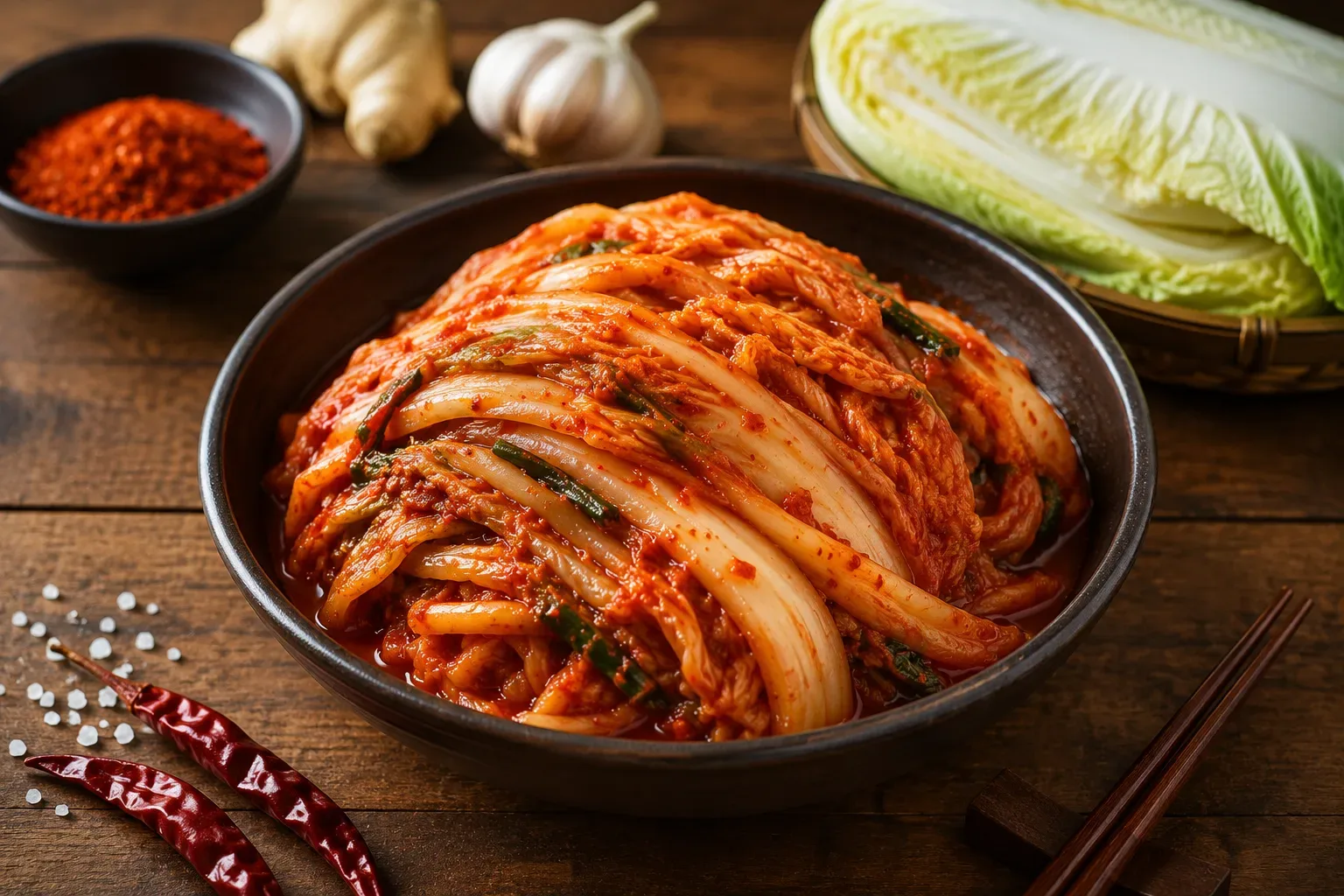
Among the world's traditional foods, few are as scientifically fascinating as Kimchi.
At first glance, it appears to be little more than seasoned fermented cabbage. In reality, kimchi is a living ecosystem—a complex biological community where beneficial bacteria, plant compounds, vitamins, and fermentation metabolites work together in ways modern nutrition science continues to study.
Unlike many processed health foods engineered in laboratories, kimchi becomes healthier over time. Every day of fermentation transforms ordinary vegetables into an increasingly sophisticated nutritional system.
For centuries, Koreans simply recognized it as essential daily food.
Today, microbiome researchers recognize it as one of the world's most remarkable naturally fermented functional foods.
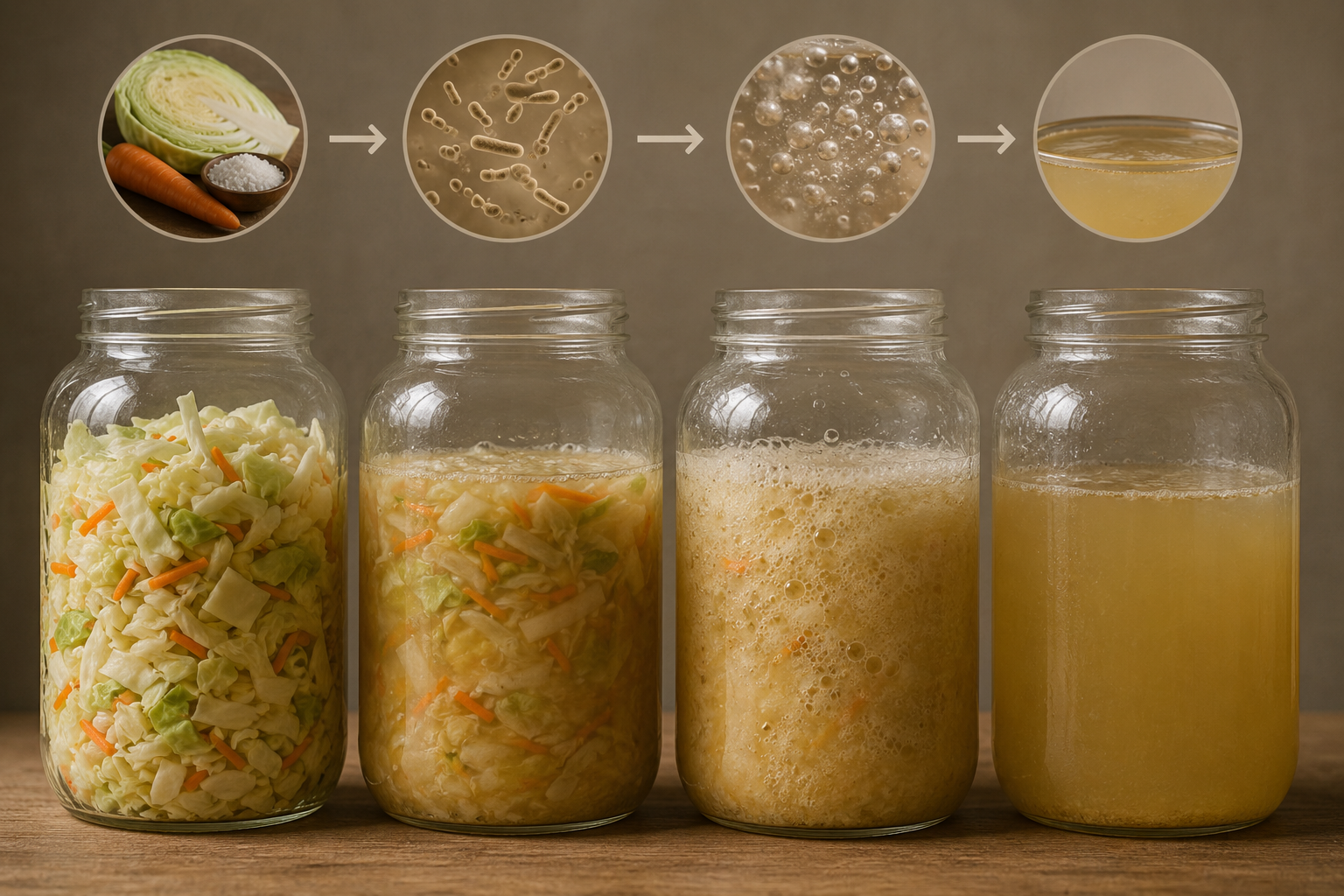
1. Fermentation: The Invisible Factory That Builds a Stronger Gut
Kimchi's greatest strength isn't cabbage.
It's fermentation.
As vegetables ferment, naturally occurring lactic acid bacteria multiply, creating an environment rich in beneficial microorganisms while suppressing harmful bacteria.
These microbes help maintain microbial diversity inside the gut, strengthen the intestinal barrier, and produce metabolites that communicate directly with the immune system.
Rather than simply adding probiotics, fermentation transforms the food itself.
Plant fibers become easier to digest.
Certain vitamins become more bioavailable.
New bioactive compounds emerge that didn't exist before fermentation even began.
The result is not just preserved vegetables—but a living food with an entirely different biological profile.
Insight Tip (How to Eat):
Fresh kimchi and aged kimchi offer different advantages. Fresh kimchi retains a crisp texture and vibrant vegetable nutrients, while well-fermented kimchi develops higher populations of lactic acid bacteria and richer fermentation metabolites. Including both styles throughout the week provides greater nutritional diversity.
2. The Metabolic Guardian: Why Kimchi Supports More Than Digestion
Kimchi is often praised for digestive health, but its influence extends much further.
Fermented vegetables supply dietary fiber, antioxidants, garlic-derived sulfur compounds, ginger phytochemicals, and naturally produced organic acids that collectively support metabolic balance.
Research suggests these compounds may contribute to:
improved gut microbial diversity
healthier glucose metabolism
reduced systemic inflammation
better lipid metabolism
stronger immune regulation
Meanwhile, the naturally occurring capsaicin from red pepper stimulates circulation and may modestly increase energy expenditure, while garlic and onion contribute organosulfur compounds associated with cardiovascular wellness.
This is why kimchi is increasingly discussed not merely as a side dish—but as a daily functional food.
Insight Tip (How to Eat):
Avoid excessively heating kimchi for long periods. High heat significantly reduces living probiotic bacteria. Enjoy some kimchi raw alongside cooked meals to preserve beneficial microbes while using aged kimchi for soups and stews where its developed flavor shines.
3. The Art of Fermentation: Why Region, Season, and Time Matter
Just as wine reflects its terroir, exceptional kimchi reflects the environment in which it is made.
Three factors determine extraordinary kimchi:
Winter Napa Cabbage — The Dense Foundation
Late-autumn napa cabbage develops tighter leaves, higher natural sugars, and greater water retention. These characteristics create the ideal texture for controlled fermentation and long-term storage.
Sea Salt — The Mineral Architect
Traditional solar sea salt contributes more than sodium. Its natural mineral composition helps regulate fermentation speed while encouraging desirable lactic acid bacteria to flourish.
Time and Temperature — Nature's Master Brewer
Kimchi is never truly finished.
Low-temperature fermentation allows beneficial microbes to multiply gradually while producing deeper acidity, richer umami, and more complex aromatic compounds.
Too warm, and fermentation becomes aggressive.
Too cold, and microbial activity slows dramatically.
The finest kimchi emerges from patience rather than speed.
💡 A Bowl of Living Nutrition: The Ultimate Takeaway
Kimchi reminds us that food is not always defined by ingredients alone.
Sometimes, the greatest transformation happens after harvest.
Fermentation doesn't simply preserve vegetables—it creates an entirely new nutritional ecosystem where beneficial microbes, plant chemistry, and time collaborate to produce something greater than the sum of its parts.
Feeling sluggish?
Recovering from a period of poor eating?
Looking to strengthen your digestive foundation naturally?
A serving of well-fermented kimchi may be one of the simplest ways to nourish not just your stomach, but the vast microbial community that quietly influences your metabolism, immunity, and long-term health every single day.